

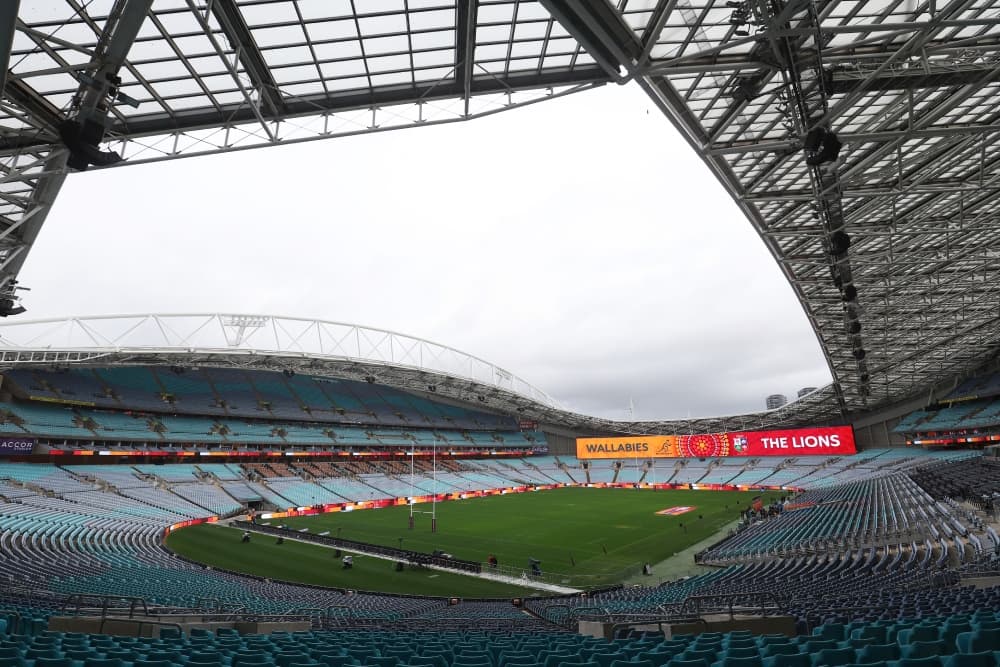
World Rugby has confirmed the eight stadiums for the 2027 Rugby World Cup in Australia.
These range across seven cities, with Sydney the lone city with multiple venues, Stadium Australia and the Sydney Football Stadium.
Watch every second of Super Rugby Pacific live and on demand via Stan Sport.
The Olympic stadium is locked in to host the Final on November 13, with the venue also set to host two quarter-finals, two semi-finals, and the bronze medal match.
Meanwhile, the reopened Football Stadium will host three pool matches and two round-of-16 games.
Five venues from the 2003 event return, including Adelaide Oval and Brisbane Stadium (commercially known as World Cup Stadium).
Docklands Stadium will host all the games in Melbourne, with the Melbourne Cricket Ground originally thought as a potential host.
The MCG broke the record for highest attended British & Irish Lions Test during the second Test in 2025.
World Rugby revealed the stadium's roof will remain closed for all eight matches, hosting six pool games and two round of 16.
Newcastle Stadium and North Queensland Stadium will make their World Cup debuts, with four pool matches held at each ground.
Perth Stadium rounds out the venues, which will open the tournament on October 1 as part of five pool games and two round of 16s.
“The selection of these stadiums reflects not only Australia’s proud rugby legacy but also our unwavering commitment to creating an unforgettable Rugby World Cup experience for every fan," Men’s Rugby World Cup 2027 Managing Director, Chris Stanley, said.
"From iconic national arenas to vibrant regional hubs, each venue has been chosen for its ability to deliver world-class facilities and electric atmospheres that will showcase the very best of our game.
“These stadiums are more than just places to play, they are stages for history, where passion and community come together to celebrate rugby’s global spirit. Today marks another exciting milestone on the journey to Australia 2027, and we cannot wait to welcome fans from across the world to experience the magic of this tournament in every corner of our country.”
Adelaide Oval – Located on the riverside and known for its stunning blend of heritage and modern design, it hosted matches in Rugby World Cup 2003, including Australia’s victory over Namibia.
Capacity: 53,000
Matches: Six pool matches
Brisbane Stadium – Known as “The Cauldron”, it is one of Australia’s most iconic rugby venues offering an electric atmosphere with fans close to the action. The stadium hosted nine Rugby World Cup matches in 2003 and featured 13 of the 2027 qualified teams.
Capacity: 52,500
Matches: Six pool matches, two round of 16 and two quarter-finals
Docklands Stadium – The only fully enclosed venue in the tournament. The roof will remain closed for all matches, ensuring perfect conditions for players and fans. Hosted seven RWC matches in 2003.
Capacity: 53,000
Matches: Six pool matches and two round of 16
Newcastle Stadium – Set to host Rugby World Cup matches for the first time in 2027. The venue’s rugby heritage includes the British & Irish Lions’ 1989 match against NSW Country and the Wallabies’ 2012 Test against Scotland.
Capacity: 30,000
Matches: Four pool matches
Perth Stadium – Opened in 2018 by the Swan River, the multi-award-winning venue is recognised globally for its design and fan experience. A regular host to Wallabies Test matches, the stadium will host the RWC 2027 opening match on 1 October 2027.
Capacity: 60,000
Matches: Five pool matches (including the opening) and two round of 16
Stadium Australia – The biggest stadium used across the tournament, it joins iconic venues Eden Park, Twickenham and Stade de France as the only stadiums in history to host a Men’s Rugby World Cup Final for a second time.
Capacity: 82,000
Matches: Two pool matches, two quarter-finals, two semi-finals, Bronze Final and Final
Sydney Football Stadium – Reopened in 2022 after a complete rebuild, the most modern stadium of RWC 2027 located in the heart of Sydney will offer fans an electric atmosphere and cutting-edge facilities.
Capacity: 42,500
Matches: Three pool matches and two round of 16
North Queensland Stadium – Opened in 2020 and making its Rugby World Cup debut, the stadium’s striking roof design is inspired by the tropical pandanus plant, native to the North Queensland region.
Capacity: 25,000
Matches: Four pool matches


