
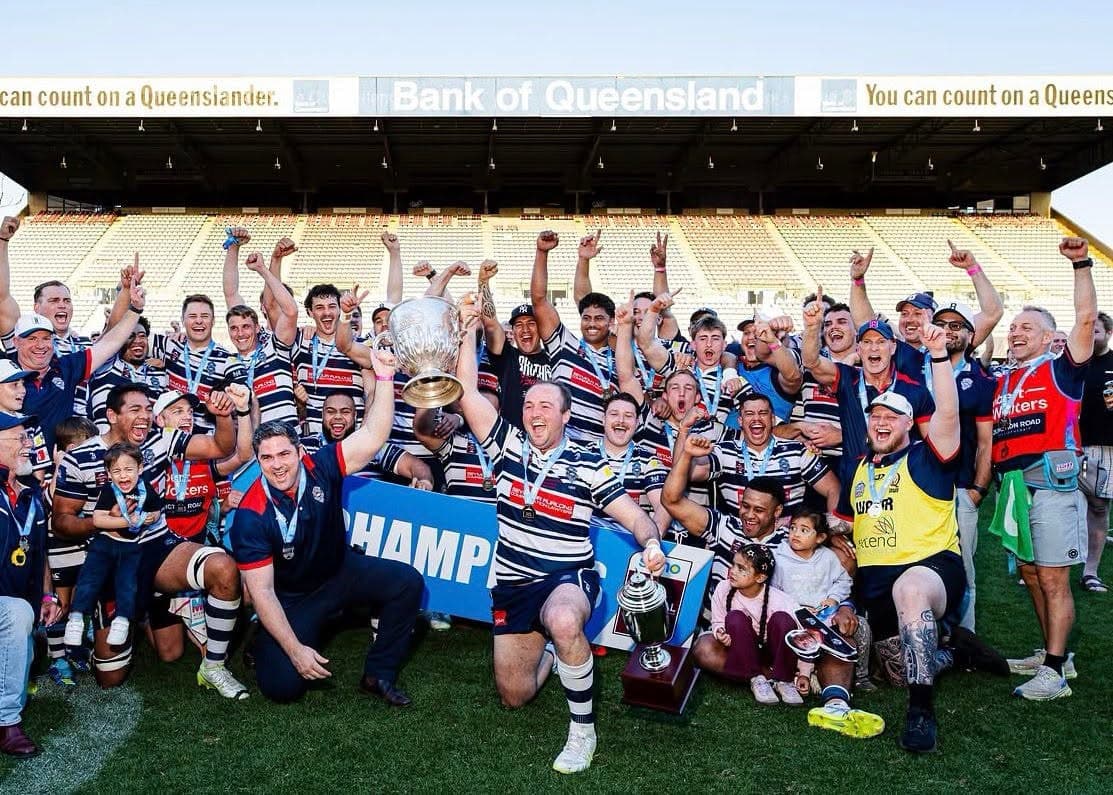
In 2026 Brothers Rugby Club treated social media and its website as one communication system rather than two jobs. Social put the club in front of people, the website gave them somewhere to go next, and the newsletter and app push notifications brought them back. The result was a season of deeper engagement with the people already around the club, and more than twice as many supporters the club can name and contact heading into 2027.
Brothers is a Brisbane club in Queensland Premier Rugby, with senior men's and women's sides, juniors through Little Brothers, and a touch football competition. 2026 was the club's second season with Clubland. What Changed 2025 TO 2026:
- Social views, Facebook and Instagram +173%
- Likes, comments and shares +358%
- Stories and galleries published on the website more than tripled
- Website visits arriving from social doubled
- Pages read per person on the website more than doubled
- Time on the website per person +31%
- Named supporters the club can contact more than doubled
- Newsletter open rate 52.4%, more than half of every send
A rugby club's people are spread across more groups than any one channel reaches: senior and junior players, their families, touch football players, past players and members, volunteers, sponsors and the supporters who turn up on a Saturday. Each group finds out what is happening in a different place. At Brothers, that information sat in separate systems. Registrations, event tickets and supporter details each lived in a different system or spreadsheet. Social media was busy but every post ended at the post. The club could see a lot of attention and had no reliable way to turn it into people coming back, signing up or turning up.
Brothers built a loop in which each channel does the job it is best at and hands people on to the next. 1 . Social finds people : Facebook and Instagram carry club news to the widest audience, including match content shared with Queensland Premier Rugby and rugby.com.au.
2 . The website gives them somewhere to go : every story, gallery, team page and fixture lives in the club's Digital Clubhouse. Fixtures and results are updated automatically.
3. The supporter database remembers them: Registrations, ticket buyers, touch players, past players, volunteers and sign ups sit together in one Supporter CRM.
4. Newsletter and push bring them back : The newsletter reaches named supporters each week, and app push notifications land on their phones with team lists, kick-off reminders and results
The club kept its existing systems for registrations, competition and ticketing. The Digital Clubhouse works alongside them and brings the people from each into one place. Clubland builds and manages the Clubhouse, so the club's volunteers can spend their time on content and the game rather than on the website.
Instagram is where the club grew. Interactions grew eightfold on 2025 and new followers more than fivefold. Each post engaged 5.2% of the people it reached, inside the 3.3% to 6.9% range typical for Instagram posts. The posts that did the most were about the club's own people. A post celebrating a first grade player's engagement after the Grand Final drew a like, comment or share from more than one in five of the people who saw it. Shared match content reached far more people but engaged closer to one in twenty.
By bringing registration, ticketing, touch football, past player, volunteer and website sign-up lists into one Supporter CRM, Brothers more than doubled the number of people it can name and contact. Juniors are held as their parent or guardian contact. That list performs. The club sent a regular newsletter through the season, and more than half of every send was opened: a 52.4% open rate and a 4.3% click rate. Both beat the sports industry averages of 47.7% and 1.3%, and the click rate is more than three times the norm. Followers and page views are reach. This is the layer that lets the club speak to its people by name. Push notifications do the job the newsletter cannot. A newsletter is read when people get to it. A push lands on a supporter's phone as it happens, from the team list on Thursday to the result on Saturday afternoon, and opens straight to the match page or story on the club website.
Roughly the same number of people visited the website in 2026 as in 2025, and each went more than twice as deep. In 2025 a visitor read three pages and left. In 2026 they read seven, spent 31% longer on the site and reached eight times as many different pages.
Teams, Fixtures and results, and Registration became three of the five most read pages on the site. None of them made the top five in 2025. Supporters were no longer just checking the score. They were following teams, finding their next game and signing up
The same depth that kept supporters on the site worked for the club's partners. Partner banners run throughout the Digital Clubhouse, so a supporter reading seven pages a visit saw sponsor messages several times each visit, and dozens of times across the season. Every one of those exposures is counted, which ground signage cannot offer. Partners who supplied designed artwork rather than a plain logo did best. One partner ran both in the same position all season, and the designed advertisement earned 18 times the click rate of the logo tile.
We were posting plenty and having good engagement on socials, but what we were lacking was direction back to our website/app and collecting supporter data. Now we can point people back to the club from our social pages, whether that's a match report, a milestone game or promoting our next club event. Plus the newly integrated newsletter keeps our supporters informed and coming back. Our players, families, supporters and past players are more connected to Brothers than they've ever been, and we know who they are. - Mitch Felsman, General Manager, Brothers Rugby Club
None of this needed a campaign or paid advertising. Brothers has never run a paid Meta ad. It came from a habit any club can start next season. 1. Give every post somewhere to land. A social post that ends at the post is attention the club cannot use again. Link it to a story, a team page or an event on the club website.
2. Post about people. Players, coaches, volunteers and families are what supporters share. Posts about named people engaged far more of their audience than posts about the club.
3. Make teams, fixtures and registration easy to find. These are the pages that turn a supporter into a participant. At Brothers they became some of the most read on the site.
4. Bring your lists together. Registrations, ticket buyers and sign-ups already exist in the systems a club uses. Gathering them in one supporter database is how a club starts talking to its whole community, not just its followers.
5. Count reach and known supporters separately. Followers and views measure reach. Named, contactable supporters are the people a club can invite back, and that is the number worth growing.
About Clubland. Clubland builds and manages Digital Clubhouses for community sports clubs, a website, a native app and a Supporter CRM in one, so players and supporters stay connected to their club.


