

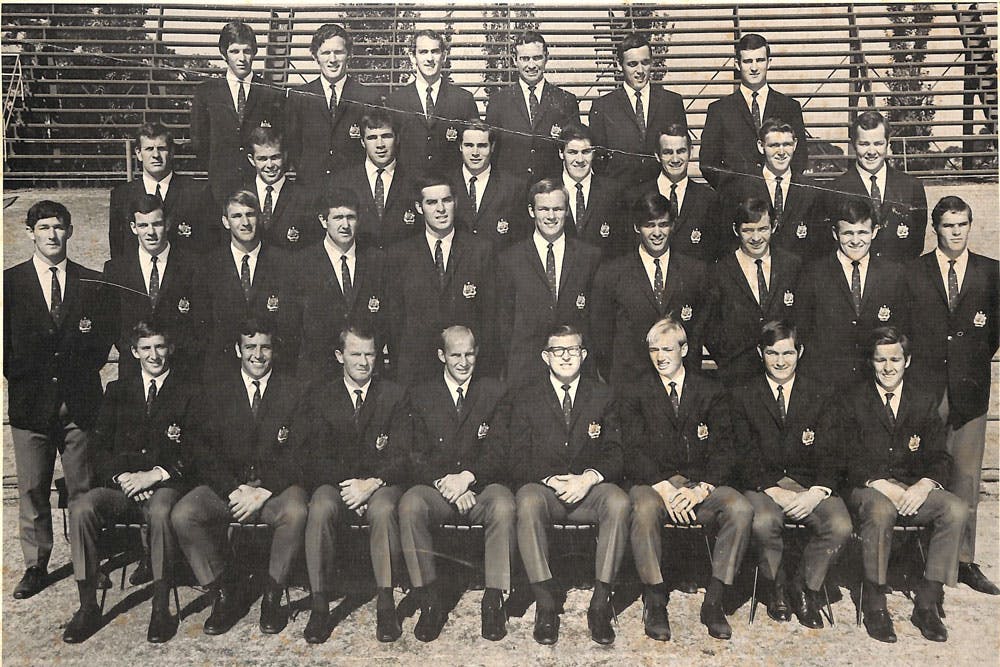
The Australian rugby community has paid tribute to three-Test Wallaby Bruce Taafe, who passed away on Sunday night following a long battle with illness, aged 73.
Melbourne-born Taafe is remembered as an outstanding hooker from the Gordon Rugby Club in Sydney who owns a slice of history as the first Wallabies representative produced by the Lindfield Junior Rugby Club, having grown up on Sydney’s north shore.
A talented multi-sports star at Knox Grammar, Taafe played in the school’s first XI cricket side for four consecutive years, as well as its first XV Rugby team, but chose to pursue the 15-man game and eventually fulfilled his dream of representing the national team.
Taafe made his Test debut against South Africa in 1969 at Ellis Park in Johannesburg, becoming the 530th capped Wallaby in a 30-11 defeat to the Springboks.
He suffered a ribs injury during the match and then in a cruel twist, ruptured his achilles tendon in training the following week and missed the remainder of the tour.
Three years later, he played two further Tests in the gold jersey, scoring Australia’s opening try in a 14-all draw with France at the Sydney Cricket Ground in 1972, before backing up for the 16-15 loss to the French at Ballymore the following weekend. In between those stints with the Wallabies, Taafe became famous for his moral stand against the South African apartheid regime when he joined six other Wallabies in withdrawing from the selection process for the 1971 inbound South African tour.
At the time, Taafe and his teammates faced fierce social and political backlash for their stance.
However, a groundswell of support grew across the country, reaching the highest office in the land in the form of incoming Prime Minister Gough Whitlam, who suspended all sporting contact with South Africa and followed by enacting trade sanctions against the country.
The “Rugby Seven” as they had become known, would later be hailed as the “Magnificent Seven” after it was recognised that a direct line could be traced from their actions, to the referendum that marked the end of apartheid in 1994.
The actions of the group were honoured by South African President Nelson Mandela, who bestowed on them the Medal of Freedom.
Their stand, at great personal cost, provided an example to Rugby and other sporting codes to formalise the sports boycott of South Africa, so long as the policy of Apartheid remained in place.
The example set by Taafe, and others, still guides Rugby Australia today with its core value of inclusion, and goal to make rugby a “game for all”.
A memorial service will be held on Sunday 6th May at 9:00am on the lawns of St Patrick's Monastery at Manly. The event is open to friends and the wider public.


